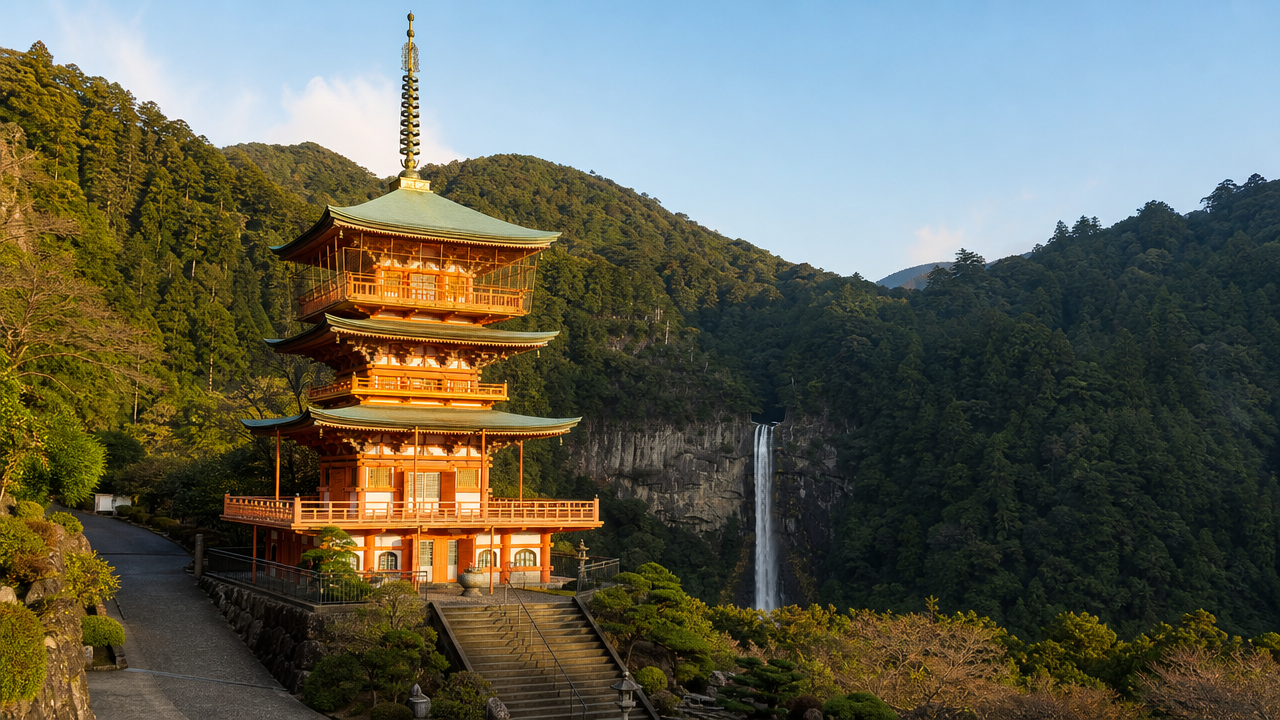
Seiganto-ji Temple
10 min walk
This temple stands adjacent to the falls and offers a view of the waterfall framed by its iconic red pagoda. It serves as a spiritual transition point for those traveling along the Kumano Kodo.

Nachi Falls sits deep in the forested mountains of Wakayama Prefecture, accessed by a combination of rail, local bus, and — for pilgrims — the stone-stepped Daimonzaka slope. The waterfall anchors the Kumano Nachi Taisha shrine complex, a UNESCO World Heritage component of the Kumano Kodo pilgrimage network. Reaching the site requires advance planning around infrequent rural transit schedules.
Quick answer
Reaching Nachi Falls from Kii-Katsuura Station takes approximately 30 minutes by Kumano Kotsu bus to the Nachi-san stop, followed by a 10-minute walk to the waterfall viewing platform. Pilgrims walking the Kumano Kodo approach via the Daimonzaka slope — a 600-meter cobblestone trail lined with centuries-old cryptomeria trees — which connects the lower bus stop to the shrine precinct in roughly 40 minutes. The conservation fee for the viewing platform is 300 JPY per person.
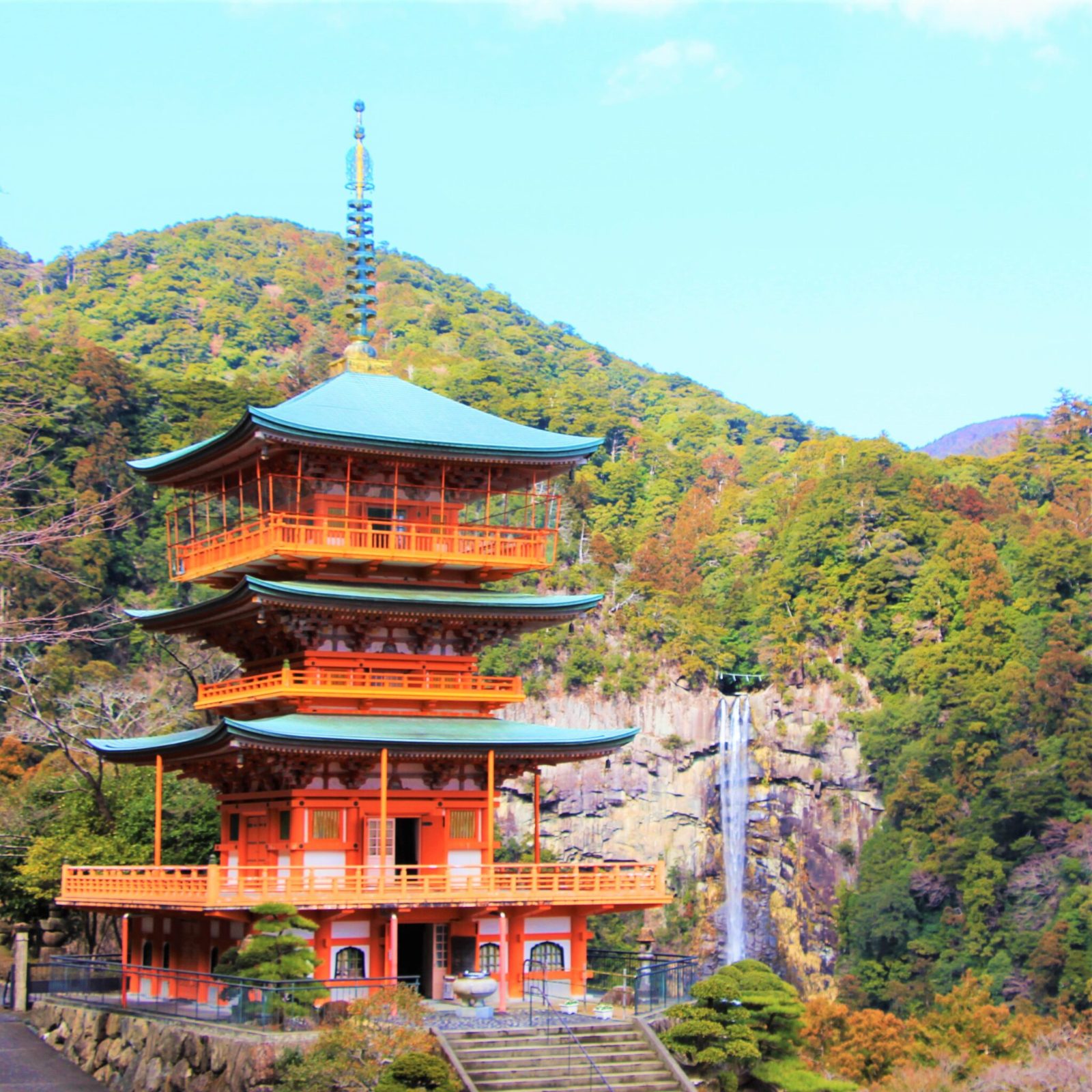
Nachi Falls drops 133 meters in a single unbroken plunge, making it Japan's tallest waterfall by vertical descent. The Kumano Nachi Taisha shrine was built to venerate the cascade as a physical manifestation of a Shinto deity, and for over a millennium pilgrims have traveled the forested trails of the Kii Peninsula to stand before it. The waterfall remains an active site of worship, not a passive scenic overlook. The standard approach for contemporary visitors begins at Kii-Katsuura Station on the JR Kisei Main Line, the closest railhead to Nachisan. Kumano Kotsu operates the only public bus service between the station and the mountain, with departures roughly every 60 to 90 minutes depending on season. The ride climbs through tight switchbacks to Nachi-san stop, the highest vehicular access point. From there, a paved path descends to Seiganto-ji Temple and the vermillion three-story pagoda that appears in most photographs of the falls. Those walking the Kumano Kodo pilgrimage route arrive from a different direction. The Daimonzaka slope begins near the lower bus stop and ascends through a tunnel of towering Japanese cedars, some more than 800 years old. The 600-meter trail gains roughly 100 meters in elevation over irregular stone steps worn smooth by centuries of foot traffic. Pilgrims emerge at the shrine gate, bypassing the upper parking area entirely. This approach preserves the experiential logic of the pilgrimage — the waterfall is encountered as the culmination of a ritual ascent, not as a drive-up attraction. The viewing platform that brings visitors within meters of the falls requires a small conservation fee, collected at a booth near the base of the cascade. The platform floats above the plunge pool, close enough that mist dampens clothing during periods of high flow. Early morning arrivals encounter fewer tour groups and softer light filtering through the canopy. The Kumano Nachi Taisha main hall sits higher on the slope, connected by additional staircases, while Seiganto-ji occupies the middle terrace with its pagoda framing the waterfall in the background.
“The waterfall remains an active site of worship, not a passive scenic overlook.”
Nachi Falls is located in the mountains of Wakayama Prefecture, typically accessed via Kii-Katsuura Station. The most straightforward approach for visitors is to take a local bus from the station directly to the Nachi-no-Taki-mae bus stop.
JR Kisei Main Line to Kii-Katsuura Station
Kumano Kotsu Bus to Nachi-no-Taki-mae stop
From Kii-Katsuura Station to Nachi Falls area
From Nachi-no-Taki-mae bus stop to waterfall base
Disembark at the Nachi-no-Taki-mae bus stop to minimize walking distance to the waterfall entrance. If traveling by car, note that parking spaces near the waterfall base are limited and can reach capacity during peak periods.
Nachi Falls is open daily for visitors to access the waterfall viewing platform. Please plan your transit to align with these consistent operational hours.
The best arrival window for visiting Nachi Falls is 07:00–09:00. Arriving during this period allows for a tranquil experience at the sacred site before larger groups arrive.
Mild temperatures, 10°C to 20°C. Popular season for pilgrims and hikers.
Humid and warm, 22°C to 30°C. Expect frequent rainfall and high humidity.
Cooling air, 15°C to 23°C. The landscape features changing foliage.
Cold, 3°C to 12°C. Clear skies are frequent during these months.
Verdict: The best time to visit is early morning between 07:00 and 09:00 during the months of April or October.
Nachi Falls is part of a larger sacred complex, making it simple to visit several historic sites on foot within the same trip. These locations are connected by the same well-maintained stone paths and transit routes used to reach the falls.
10 min walk
This temple stands adjacent to the falls and offers a view of the waterfall framed by its iconic red pagoda. It serves as a spiritual transition point for those traveling along the Kumano Kodo.
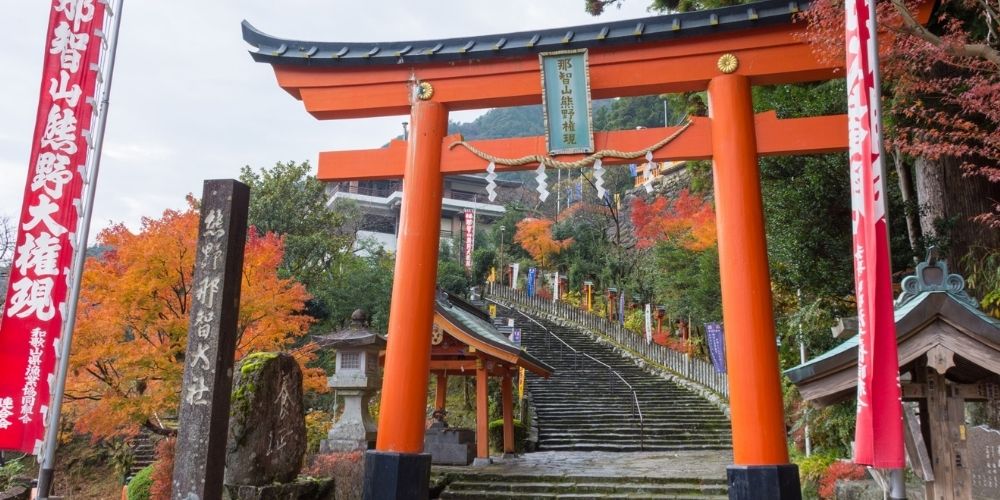
15 min walk
As one of the Kumano Sanzan shrines, this site provides cultural context to the natural surroundings of the falls. Its architecture and forest setting are integral to the area's history.
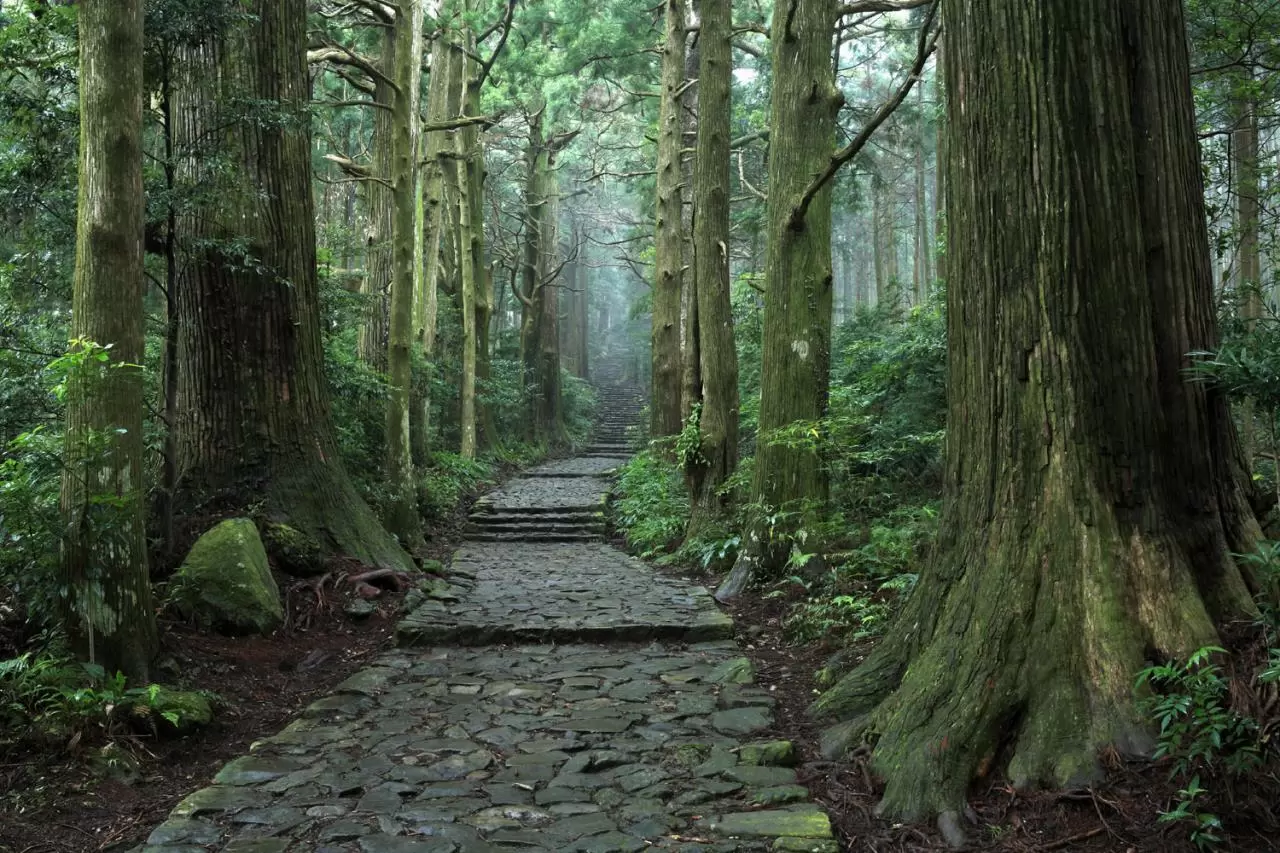
25 min walk
This historic cobblestone path lined with ancient cedar trees marks the traditional pilgrimage approach. Walking this section provides a quiet, immersive experience before or after reaching the falls.
Everything you need to know about how to get to nachi falls
To reach the site, travelers typically take a local bus from Kii-Katsuura Station directly to the Nachi-no-taki-mae stop. From there, it is a short walk to the base of the sacred site.
The best arrival window for Nachi Falls is between 07:00 and 09:00. Arriving early in the morning helps you avoid larger crowds and enjoy the tranquil atmosphere.
Yes, there is a conservation fee of 300 JPY per person for access to the waterfall viewing platform. This fee supports the preservation of this historic landmark.
Most visitors wondering how to get to Nachi Falls utilize the bus network departing from the main regional rail hub. The bus route provides consistent service connecting the station to the Nachi mountain area.
The site is open daily from 07:00 to 16:30. These hours apply throughout the week, including weekends and holidays.
Many hikers incorporate this spiritual site into their Kumano Kodo pilgrimage itinerary by following the established trail markers toward the Nachi-no-taki cascade. It serves as a significant stop along the mountain route.
For those short on time, planning your trip around the bus schedule from Kii-Katsuura Station is the most efficient approach. Knowing how to get to Nachi Falls beforehand allows you to maximize your morning visit during the quietest hours.